
Ranch and Acreage Fencing in Central Oregon
Split rail, wire, and pipe fencing for horses, livestock, and larger properties.
Fencing a few acres is a different job from fencing a backyard. The runs are long, the ground is often rocky, and the fence has to hold animals that lean, rub, and test it every day. Out here it also has to handle juniper roots, lava rock a few inches under the topsoil, and winters that heave anything not set properly. We build ranch and acreage fencing around Tumalo, out toward Prineville, and on the larger properties that ring Bend and Redmond. Some clients have horses or livestock. Others just want a clean line around their land, a pasture split in two, or a fence that keeps deer out of a garden and orchard. Whatever the reason, the fence has to be built for the animals and the ground it sits on.
Below we cover the main types of rural fence, how corners and braces make or break a long fence line, how we plan and build the job, and what upkeep looks like over the years. Gates, cattle guards, and short runs of fence repair on existing lines are all part of the work too, and quotes are always free. We'll walk the property with you, measure the runs, and give you a written price broken out by section.
Signs You Need New Acreage Fencing
Sometimes it's a new property with no fencing, or an old fence line that's falling down. Sagging wire, broken rails, and posts snapped off at the ground are the usual signs. If animals keep finding the same weak spot, the fence is telling you something. Other times your needs change. Bringing home horses means you need a fence they can see and won't get tangled in. Adding goats or sheep means tighter mesh, since they'll walk right through a three-strand wire fence. A new garden or young orchard often needs taller deer fencing, since mule deer clear a standard fence with ease. We'll walk the property with you, look at the terrain and soil, talk through what the fence needs to hold, and lay out the options that fit both the job and what you want to spend.
Split Rail, Woven Wire, Barbed Wire, and Pipe
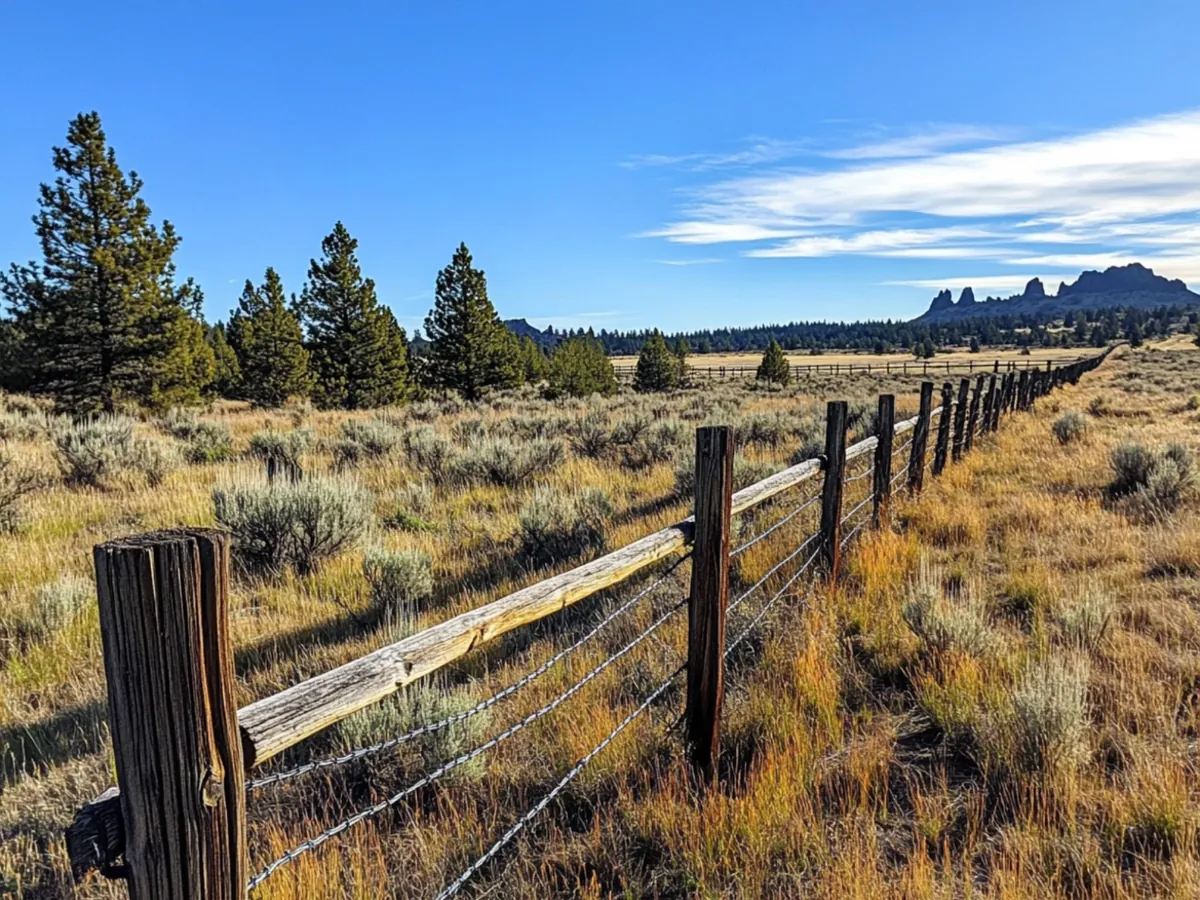
Each type does a different job. Split rail looks classic and works well for marking property lines and dressing up a driveway, but on its own it won't hold small animals. Woven wire, sometimes called field fence, uses a grid of wire that keeps sheep, goats, and dogs in, and it's often topped with a strand of barbed or smooth wire. Barbed wire is the traditional cattle fence and covers long distances affordably, though most horse owners avoid it because of injury risk. Pipe fencing, built from welded steel pipe, is extremely strong and nearly maintenance-free, which is why you see it around arenas and corrals. We often combine types on one property, matching each section to its job. Pipe for the corral, woven wire for the pasture, and split rail along the road is a common mix.
How We Build a Ranch Fence
A long fence is only as strong as its corners. Before we string any wire, we build braced corners and end posts, usually an H-brace with a horizontal rail and a tensioned diagonal wire, so the fence can be stretched tight without pulling the corners over. Gates and changes in direction get the same treatment. Then we set the line posts, which can be wood or steel T-posts depending on the fence and the animals. In rocky ground we sometimes need a power auger or a rock bar to get posts deep enough. Wire gets stretched and attached, rails get fastened, and gates get hung on heavy posts. We walk the finished line with you before we call it done. Long jobs are scheduled around weather so the ground isn't frozen or muddy.
Upkeep on a Long Fence Line
Even a well-built ranch fence needs some attention. Walk or drive the line a couple of times a year, ideally in spring after the snow melts and in fall before it returns. Look for leaning posts, loose or broken wire, staples that have pulled out, and spots where animals have been pushing. Wire fences may need re-tensioning every few years as they stretch. Wood posts in wet or low spots tend to rot first. Fallen limbs and windblown debris can bring down a section in one storm, so clear anything resting on the fence. Catching small problems early keeps a long fence line from turning into a big repair bill, and it keeps animals where they belong. We can do periodic check-ups if you'd rather not walk it yourself, and we'll fix what we find on the same visit.
Need a fence closer to the house as well? We also handle residential fence installation, from cedar privacy fences to front-yard pickets.